
Coconut oil is famous throughout the world not
only as an edible oil and hair tonic, but also as an excellent massage oil and smoother for the skin. In the tropical parts of the
world where coconuts are readily available and used in many ways, natives
commonly spread coconut oil on their skin, as they believe that it protects
from the sun’s harmful rays. So this natural oil, without any chemical or
additives, can protect the skin in some of the hottest and sunniest places on
earth better than our processed and artificial sun creams?
The question is, what makes coconut oil so beneficial for the
skin? Before we can understand how coconut oil achieves all of its impressive
benefits that people around the world claim, let’s look into the constituents
of coconut oil and their respective properties that might make them useful for
maintaining skin health.
Coconut Oil- Composition
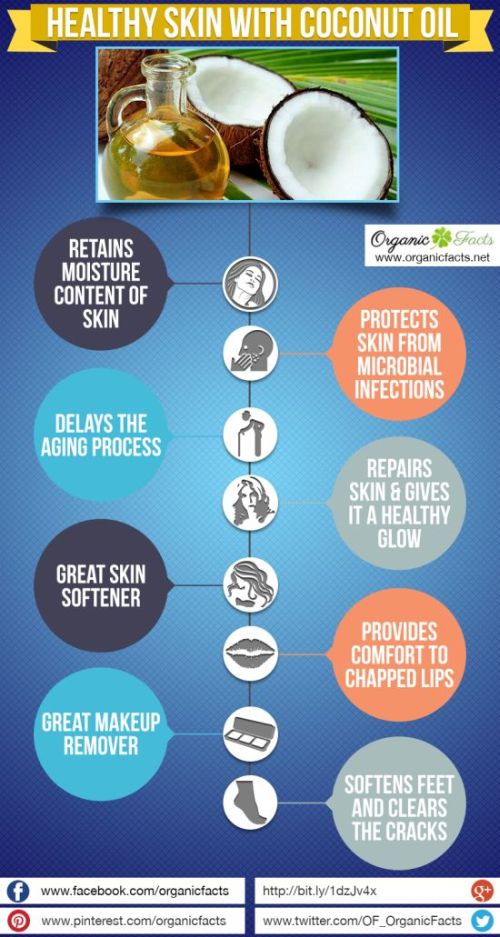
Saturated Fats: Predominantly, these saturated fats are medium chain fatty acids or
triglycerides. When applied on the skin, they keep it smooth to the touch. Due
to the presence of these fats, coconut oil also retains the moisture
content of the skin, as the fats eliminate moisture loss through the pores on
skin. When ingested through the regular consumption of coconut oil, these fats
deposit under the skin, thus keeping it healthy and smooth, giving it an even
tone and reducing the appearance of the pores.
Capric /Caprylic/Lauric
acid: These are not very different from the
medium chain fatty acids, but it is still important to mention them separately
here, since they have their own contributions. These three fatty acids have
strong disinfectant and antimicrobial properties. As a result, when applied on
the skin, coconut oil protects from microbial infections that can get into
open wounds or even enter the body through the pores. This microbial action can
be experienced even if coconut oil is taken internally, as the fatty acids
boost the immunity when converted to monocaprin and monolaurin.
Furthermore, capric, caprylic, and lauric
acids are easily broken down chains of fatty acids, meaning that they
contribute to usable energy in a quick and efficient way. This can be a major boost to your energy levels before a workout, which is why these
powerful acids have also been linked to weight
loss and management. Losing weight is a good way to improve the quality of your
skin by reducing excess fat, stretch marks, and folds in the skin which can be
unattractive. Having a healthy, toned body means that the skin maintains its
tight grip around the muscles and bones.
Vitamin-E: The contributions
of vitamin-E towards skin care are well known. It
is essential for healthy skin growth, repair of wear & tear on the skin,
keeping skin smooth and protecting against cracking. Above all, it prevents
premature aging and wrinkling of the skin, since it has good antioxidant
properties. 100 grams of coconut oil has about 0.1 mg of vitamin E, thus enhancing it
skin-nourishing properties.
Proteins: Like coconuts themselves, coconut oil is rich in many proteins.
These proteins keep skin healthy and rejuvenated, both internally and
externally. Proteins also contribute to cellular health and tissue repair,
along with a wide range of other essential activities within the body. For any
damaged cells on or near the skin, a healthy of flow of proteins guarantees
their replacement at a normal rate, whereas people with protein-deficient diets
heal slower and often develop more obvious scars due to the extended healing
time.
The best property of coconut oil that makes it so beneficial for
skin is that it does not become rancid. When you apply it on the skin, it can
work for a longer time, unlike many other oils, without it getting rancid. Due
to these various beneficial properties
of coconut oil, it is used as an important ingredient in several skin care
creams.
Uses of Coconut Oil for Skin Care
Coconut oil can be used for skin care in the following ways:
Lip Gel: Cracks in our lips
can be a source of worry, discomfort, and embarrassment. When we apply chemical
gels on the lips, it is possible to consume those gels accidentally, even
though they are somewhat toxic. Some gels may be edible, but you still don’t
want to eat those chemicals.
Coconut oil comes as an ideal alternative in such cases. It acts
quickly and even if it goes in your stomach, it will only give you additional
benefits, so everyone wins!
Skin softener: Most of us use several creams and lotions for softening our
skin, especially the skin of the face and hands. Coconut oil is a great skin
softener and helps you do away with dry
and hard skin conditions. Simply take some coconut oil on your palms, rub your
palms against each other once or twice and then on your face, hands, or
wherever you want to see the moisturizing effect.
Coconut oil is also good for hardened and cracked feet, which
may happen due to excessive cold or strenuous work while standing on your feet.
The cracks in your feet will not vanish, but your feet will become softer
within days if you apply coconut oil to the affected area.
As an exfoliant, including coconut oil as an agent with other
exfoliating or grainy materials like salts and sugars can vastly improve the
effects. You will successfully scrape off excess dead skin and clean out
whatever substances have blocked the pores without
leaving the skin feeling irritated. The natural soothing nature of the oil
combines with the grainy, exfoliating material perfectly, and leaves your skin
with an even color, closed pores, and a soft texture.
Makeup Remover: Coconut oil can
also be used a makeup remover. This is not common, but women have begun using
it for removing the makeup of the face and eyes, without worrying about the
harsh chemicals of other removers getting into delicate or sensitive areas.
Skin disorders: It is claimed that
coconut oil is good for several skin disorders such as acne, psoriasis, and eczema. Several
readers have reported this benefit. However, scientific research is ongoing in
order to prove or disprove these claims. Much of the research that is there
speaks to its protein content, since the replacement of sick or dying cells
that can occur with various skin disorders, are quickly replaced by new,
healthy cells. In this way, coconut oil not only treats the infection by battling the microbial bodies, they also heal the damage or the
visible marks of that skin disorder; it is a two-in-one solution!
How To Use Coconut Oil
For many who have never used coconut oil, its various
applications can be confusing. You should try to buy coconut oil in a jar which
has a broad opening. In colder climates, coconut oil can be solid, like a
cream. However, in warm temperatures, it comes as a liquid. For skin care use,
take some coconut oil, either solid or liquid, on your palm. Then, rub your
palms together and onto the skin of the desired area. You can also put the
coconut oil on a piece of cotton and rub the cotton onto your skin. However, it
is not necessary to reapply coconut oil as often as other natural skin care
oils. You only need a small amount to create a protective shield on your skin
that will last for a long time.
Many people make the mistake of using too much coconut oil, and
since the skin can only absorb a certain amount, the protective layer that the
absorbed oil creates doesn’t let any more oil in! This means that if you use
too much, too often, your skin will end up as an oily mess, and will look shiny
or greasy, not to mention what it might do to your clothes! Then, go get
yourself some coconut oil and bring your skin back to its natural beauty!

No comments:
Post a Comment